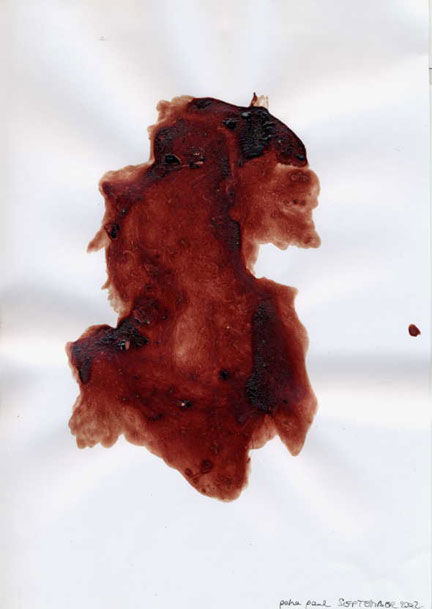
Napkin Blood watch in english with english subtitles in QHD 16:9

Veil of Veronica - Wikipedia. The Veil of Veronica, or Sudarium (Latin for sweat- cloth), often called simply . Various existing images have been claimed to be the . When she paused to wipe the blood and sweat (Latin sudor) off his face with her veil, his image was imprinted on the cloth. The event is commemorated by the Sixth Station of the Cross. According to some versions, St.
Veronica later traveled to Rome to present the cloth to the Roman Emperor Tiberius and the veil possessing the Grace of God, was able to quench thirst, cure blindness, and even raise the dead. The story is not recorded in its present form until the Middle Ages.
During the fourteenth century it became a central icon in the Western Church – in the words of art historian Neil Macgregor – “From . The closest written reference is the miracle of Jesus healing the bleeding woman by touching the hem of Jesus’ garment (Luke 8: 4. Veronica by the apocryphal . The story was later elaborated in the 1. Christ gave her a portrait of himself on a cloth, with which she later cured Tiberius.

The linking of this with the bearing of the cross in the Passion, and the miraculous appearance of the image was made by Roger d'Argenteuil's Bible in French in the 1. It is also at this point that other depictions of the image change to include a crown of thorns, blood, and the expression of a man in pain. However, the history of that image is somewhat problematic. It has often been assumed that the Veronica was present in the Old St Peter's in the papacy of John VII (7. Veronica chapel was built during his reign, and this seems to have been the assumption of later writers. However, this is far from certain, as mosaics which decorated that chapel do not refer to the Veronica story in any way. Furthermore, contemporaneous writers make no reference to the Veronica in this period.
It would appear however that the Veronica was in place by 1. Shortly after that, in 1. Pope Innocent III, who also granted indulgences to anyone praying before it.
This parade, between St Peter's and the Santo Spirito Hospital, became an annual event and on one such occasion in 1. Pope Boniface VIII, who had it translated to St. Peter's in 1. 29. Jubilee in 1. 30. During this Jubilee the Veronica was publicly displayed and became one of the .
For the next two hundred years the Veronica, retained at Old St Peter's, was regarded as the most precious of all Christian relics; there Pedro Tafur, a Spanish visitor in 1. On the right hand is a pillar as high as a small tower, and in it is the holy Veronica.
When it is to be exhibited an opening is made in the roof of the church and a wooden chest or cradle is let down, in which are two clerics, and when they have descended, the chest or cradle is drawn up, and they, with the greatest reverence, take out the Veronica and show it to the people, who make concourse there upon the appointed day. It happens often that the worshippers are in danger of their lives, so many are they and so great is the press. Pedro Tafur, Andan.
The Twilight Zone Mystic Seer Replica - Cream Head - Bif Bang Pow!
The story behind "The Girl From Ipanema," the second-most recorded song in history by composer Antonio Carlos Jobim and the poet Vinícius de Moraes. The Blue Blood trope as used in popular culture. The military elite in the Middle Ages and the perceived elite afterwards. Need tips on how to remove blood stains? Find detailed cleaning instructions and tips for getting rid of blood stains from Tide. Recipe: Blood Orange Martinis Even the people in vampire costumes will be standing in line at the party for one of these delicious drinks. Get in the Halloween spir. Why You Might Need to Premedicate With Antibiotics Before You See Your.
In 1. 62. 9, Pope Urban VIII not only prohibited reproductions of the Veronica from being made, but also ordered the destruction of all existing copies. His edict declared that anyone who had access to a copy must bring it to the Vatican, under penalty of excommunication. After that the Veronica disappears almost entirely from public view, and its subsequent history is unrecorded.
Arunachalam Muruganantham has helped bring cheap sanitary pads to rural India, by inventing a simple machine to make them - but it nearly cost him his marriage.
As there is no conclusive evidence that it ever left St Peter's, the possibility exists that it remains there to this day; this would be consistent with such limited information as the Vatican has provided in recent centuries. Images traditionally connected with the Veil of Veronica.
Each member of this group is enclosed in an elaborate outer frame with a gilded metal sheet (or riza in Russian) within, in which is cut an aperture where the face appears; at the lower extreme of the face there are three points which correspond to the shape of the hair and beard. Milton Stubbs watch online in english 1440p on this page. Veil of Veronica. The Vatican Veronica. The Holy Face of Vienna. The Holy Face of Alicante.
The Holy Face of Ja. This image is stored in the chapel that lies behind the balcony in the southwest pier supporting the dome. Very few inspections are recorded in modern times and there are no detailed photographs. The most detailed recorded inspection of the 2. Jesuit art historian Joseph Wilpert was allowed to remove two plates of glass to inspect the image. He commented that he saw only .
Veronica holding the veil. Strozzi in the right hand corner of the inner frame.
He was the secretary of Pope Paul V, and a man referred to by Vatican notary Jacopo Grimaldi as making a series of six meticulous copies of the veil in 1. The face within is very unclear, more a series of blotches in which only the bare elements of a nose, eyes and mouth can be identified. This argues for the authenticity of the copy as there is clearly no attempt at artistic enhancement. Furthermore, the fact of its being copied from the Vatican copy after the Sack of Rome in 1. It is kept in the Schatzkammer of Sacred and Secular Treasurers of the Habsburg dynasty in the Hofburg Palace, Vienna. Monastery of the Holy Face, Alicante, Spain. This veil was given by a Vatican cardinal to a Spanish priest, Mosen Pedro Mena, who took it to Alicante, in southern Spain, where it arrived in 1.
Carried in a procession on 1. March by an Alicante priest, Father Villafranca, a tear sprang from the eye of the face of Christ on the veil and rain began to fall. The relic is now housed in the Monastery of the Holy Face (Monasterio de la Santa Faz), on the outskirts of Alicante, in a chapel built in 1.
Jos. The chapel is decorated with paintings depicting the miraculous termination of the drought, local personalities associated with the founding of the chapel and religious themes of judgment and salvation. The Monastery was extensively restored between 2. Cathedral of Saint Nicholas and the Basilica of St Mary in the city centre, and the three buildings housed an exhibition in 2.
The Face of Eternity. It is kept in a shrine by the high altar and is annually exhibited to the people on Good Friday and on the Feast of the Assumption. It is exhibited in a chapel to the side of the Cathedral every Friday from 1. Known as the Santo Rostro, it was acquired by Bishop Nicholas de Biedma in the 1. Century. Bozzo found that the image was imprinted on a cloth that had been pasted onto a wooden board.
Silvestro until 1. Matilda chapel in the Vatican.
It is housed in a Baroque frame donated by one Sister Dionora Chiarucci in 1. Like the Genoa image, it is painted on board and therefore is likely to be a copy. It was exhibited at Germany's Expo 2. Holy See. The Manoppello Image. Professor Pfeiffer had, in fact, been promoting this image for many years before. The pilgrim gave it to Dr. Giacomo Antonio Leonelli, who was sitting on a bench in front of the church.
The doctor went into the church and opened the parcel containing the Veil. At once, he went out of the church but did not find the bearer of the packet. The Veil was owned by the Leonelli family until 1. Pancrazio Petrucci, a soldier married to Marzia Leonelli, stole the Veil from his father- in- law’s house. A few years later, Marzia sold it for 4. Doctor Donato Antonio De Fabritiis to pay a ransom demand for her husband who was then a prisoner in Chieti.
The Veil was given by De Fabritiis to the Capuchins who still hold it today. This history was documented by Father Donato da Bomba in his “Relatione historica” following researches started in 1. Representative art. One tradition (Type I), common in Italian art, shows the face of Christ as full- bearded, in pain, scourged and perhaps crowned with thorns. Another (Type II), common in Russian and Spanish art, shows Christ's face more often in repose, hair extending to shoulder length and a bifurcated beard, often surrounded by a halo quartered in a cross. Another (Type III), common in the Philippines shows Christ's face three times with hair down to the shoulder and with the Crown of Thorns. Civic Museum, Pavia, Italy.
Holy Face Held by Two Angels Juan S. Monastery of Cartuja, Granada. Holy Face Domenikos Theotokopoulos (El Greco).
Convent of Capuchin Nuns, Toledo. Veronica's Veil Francisco de Zurbar. Parish Church of St Peter, Seville. Type IIHead of Christ on the Sudarium Claude Mellan, 1. Diptych of Saint Veronica with Christ and the Virgin Mary Bernardo Martorelli, fifteenth century.
Museum of Mallorca. Holy Face, anonymous, early 1. Tretyakov Gallery, Moscow. Holy Face Simon Ushakov, 1. Tretyakov Gallery, Moscow. Miracle of the Tear Juan Conchillos, 1.
Lady Chapel of the Monastery of the Holy Face, Alicante. Miracle of the Three faces Juan de Miranda, 1. Alicante Ayuntamiento. Saint Veronica Antonio Castillo Lastrucci, 1. Basilica of St Mary, Alicante. Veil of Veronica in Art.
St Veronica with the Sudarium. Domenico Fetti, The Veil of Veronica. St. Veronica with the Holy Kerchief.
The veil of St. Veronica (Vera Icon), c. Head of Christ on the Sudarium, engraving by Claude Mellan (1. Christ's nose. Image of the Saviour, a traditional Orthodox iconography in the interpretation of Simon Ushakov (1. Correggio, 1. 52. St. Veronica with the Holy Kerchief, by Mattia Preti.
See also. Retrieved 2. April 2. 01. 6. This tradition began most prominently with St. Francis of Assisi (1.
It is also observed by a growing number of Anglicans, Methodists, and Lutherans. It is most commonly done during Lent, especially on Good Friday. II,1. 97. 2 (English trans from German), Lund Humphries, London, pp. ISBN 0- 8. 53. 31- 3. G Schiller, op. Retrieved 2. September 2. 01. 4. Sacred Blood, Sacred Image: The Sudarium of Oviedo, New Evidence for the Authenticity of the Shroud of Turin.
San Francisco: Ignatius Press. Joan Carroll Cruz, OCDS, Miraculous Images of Our Lord.
ISBN 0- 8. 95. 55- 4. Ewa Kuryluk, Veronica and Her Cloth: History, Symbolism, and Structure of a True Image.
ISBN 0- 6. 31- 1. Ian Wilson, Holy Faces, Secret Places,Corgi, ISBN 0- 5.